Showing posts with label heirloom tomatoes. Show all posts

Tuesday, August 26, 2014

Tomato Salad - Kicked Up!

In addition to writing this blog, I also develop brochures for our local foods team.  I usually do about five brochures per year. I do two in the summer and one for each of the other seasons.


You might think eating locally in the Midwest is difficult, but it's not. Now, come fall and winter, a Midwesterner will be consuming root crops, kale, turnips, broccoli and beans. Dietitians recommend consuming a variety of foods and eating locally is one way to accomplish that. 

This recipe is one that I did for our local foods group. It stars locally grown tomatoes. Sometimes we just slice tomatoes, sprinkle with a little salt AND EAT! But at other times, we like to dress them up. Don't worry the tomatoes still shine through.


Tomato Salad with a Shallot Vinaigrette
 
Serves 6-8.

Ingredients:

3 Tablespoons minced shallots
3 Tablespoons red wine vinegar
½ teaspoon kosher salt plus more
½ teaspoon sugar
4 Tablespoons extra-virgin olive oil
5 large ripe beefsteak type tomatoes, cut into ½-inch slices
2 Tablespoons capers, rinsed
Freshly ground black pepper
10 fresh basil leaves, thinly sliced

Directions:

1. Combine shallots, vinegar, ½ teaspoon salt, and sugar in a small bowl. Gradually whisk in oil to blend. Set vinaigrette aside.

2. Arrange tomatoes on a large platter. Sprinkle capers over; season with salt and pepper. Scatter basil on top. Whisk vinaigrette again; drizzle over salad. Serve immediately.

Wednesday, August 31, 2011

Heirloom Tomatoes - What's Old Is New Again

While taking a stroll through my local farmers market, I discovered a wide array of tomatoes.  Some are red and round, red and oblong.  There yellow, orange, green and purple tomatoes.  Through visiting the farmers markets, I have discovered a whole other world of tomatoes. 

These “new” tomatoes have been around for quite some time.  It’s just that many heirloom tomatoes are not necessarily good for shipping.  Therefore, they don’t show up at your local supermarket.  However, local farmers grow for flavor and taste.  Long distance shipping is not a major concern for them.  This frees up farmers to grow what they like and most importantly, what we like. 

Local farmers are more likely to grow what is referred to as heirloom varieties.  An heirloom variety is generally a variety that has been passed down, through several generations of a family.  Many heirloom varieties are pre-Columbian and some are pre-European.  Some heirloom varieties can be traced back to Africa and Asia.  Heirloom vegetables come in a myriad of shapes, flavors, textures that are so different from commercial varieties seen in large grocery stores. 

This tomato salad recipe is a perfect place to show off heirloom vegetables.  If you like, capers, olives and a cheese, such as goat, or blue can also be added.

Heirloom Tomato Salad

Serves 6.

Ingredients:

6 ½-inch thick slices crusty bread
1½ Tablespoons red-wine vinegar
½ teaspoon salt
½ teaspoon Dijon mustard
¼ teaspoon freshly ground black pepper
3 Tablespoons olive or vegetable oil
½ small red onion, thinly sliced
3 pounds mixed tomatoes, cut into bite size pieces

Directions:

1.    Slice and toast the bread.

2.      Whisk together vinegar, salt, mustard, and pepper.  Add oil in a slow steady stream, whisking until dressing is emulsified. 

3.     Add onion and tomatoes.  Toss gently to coat.  Season with salt and pepper. Place bread on plate.  Top with tomatoes and serve.

Tuesday, August 10, 2010

Tomatoes - At Their Prime

I decided that tomatoes should have their very own posting. And why not? Farmer’s markets are overflowing with lots of varieties of tomatoes. They are a perennial favorite of home gardeners. Tomatoes are everywhere – for now. In a few weeks the good ones will be gone until next year. So why not enjoy them in their prime.

Botanically speaking the tomato is a fruit. We consume the tomato primarily as a vegetable. That means tomatoes are usually found in savory dishes. Tomatoes are consumed raw, cooked in sauces, soups, as part of a sandwich, and salads. Occasionally, tomatoes are used to make jams and preserves.

When most of us think of tomatoes, we think of the basic red or maybe the cherry or grape tomato. There are thousands of varieties of tomatoes. They range in color from green, to yellow, to orange, to red and probably a few others.
  • Most tomatoes found in the grocery store are referred to as “slicing” or “globe”.
  • Beefsteak tomatoes are large and are often used for sandwiches. Although these are grown by home gardeners, they are found less frequently in commercial use.
  • Plum or paste tomatoes have a higher solids content and are good for sauce.
  • Cherry tomatoes are small and round. These are often sweet and generally eaten in salads.
  • Grape tomatoes, the newest commercially available tomato, are small and oblong. They too are frequently used in salads.
Give some of these other tomatoes a try. You may be surprised at how different the flavors really are.

Recently home gardeners and farmer’s market vendors have been showing off heirloom tomatoes. These are varieties that have been passed through several generations. These generally have some characteristic that the grower likes. Heirloom varieties include Cherokee Purple, Green Zebra, Brandywine and Mortgage Lifter. There are several companies such as Seed Savers (http://www.seedsavers.org/) that are good sources of heirloom seeds. 

Heirloom Tomato Salad

Serves 4.

Ingredients:
1teaspoon salt
1 Tablespoon Dijon mustard
1 teaspoon mayonnaise
½ teaspoon black pepper
3 Tablespoons red wine vinegar
3 Tablespoons olive or vegetable oil
2 pounds mixed heirloom tomatoes

Directions:
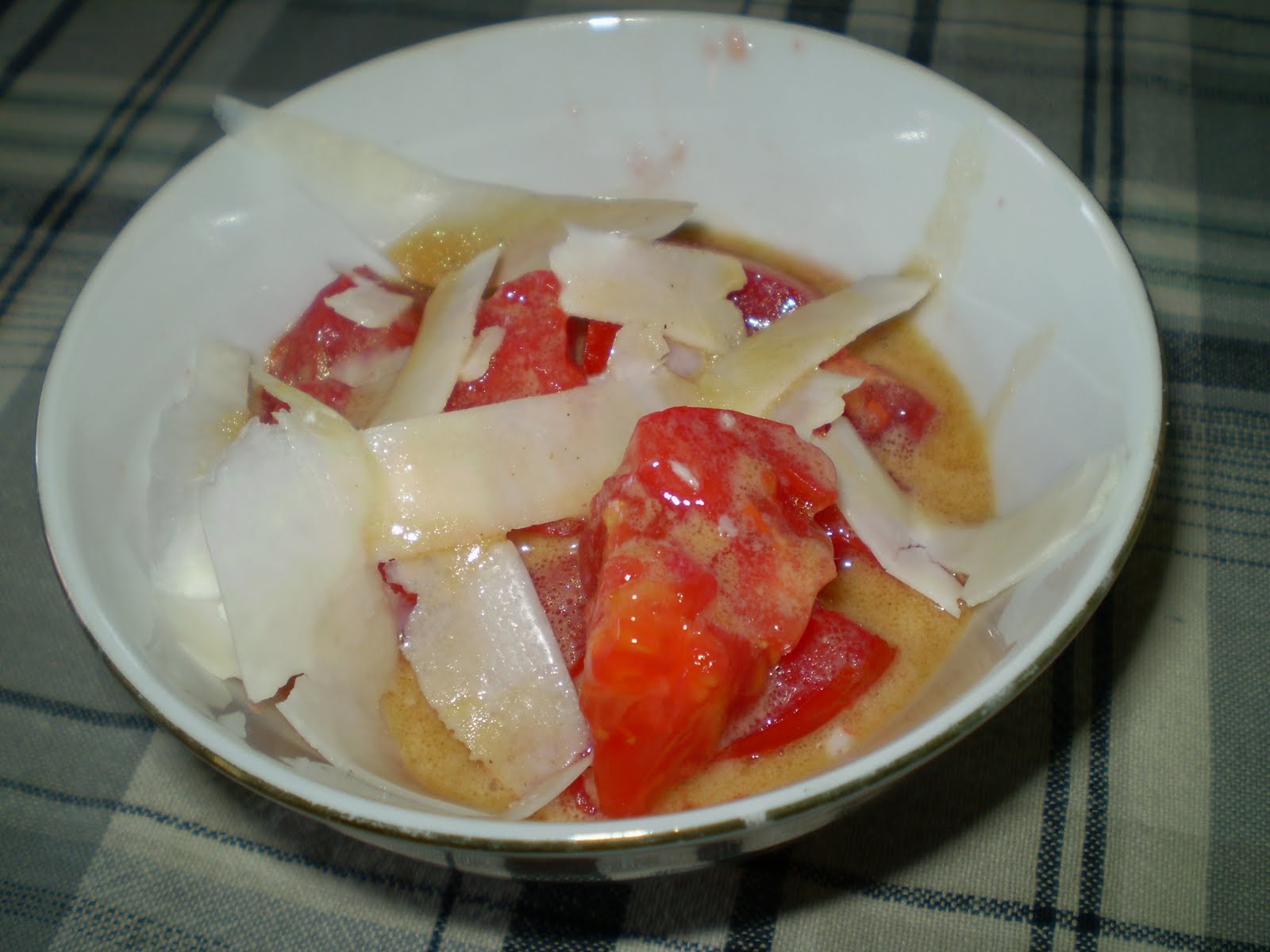
In a small bowl, combine salt, mustard, mayonnaise and black pepper. Slowly stir in the vinegar. Add oil in a slow stream, whisking constantly to emulsify. Toss with tomatoes and serve immediately.

Notes on This Recipe
This is a variation on a recipe I found on a website. It was quite interesting reading the comments. One reader added parmesan or blue cheese. Someone else added red onions. While others added basil and yellow bell peppers. That’s the fun thing about cooking, you can change a recipe to meet your tastes and it is all perfectly fine. I found this dressing to be a bit acidic. If you prefer less acid, just reduce the amount of vinegar.